Harris Farm sells Israel’s apartheid dates
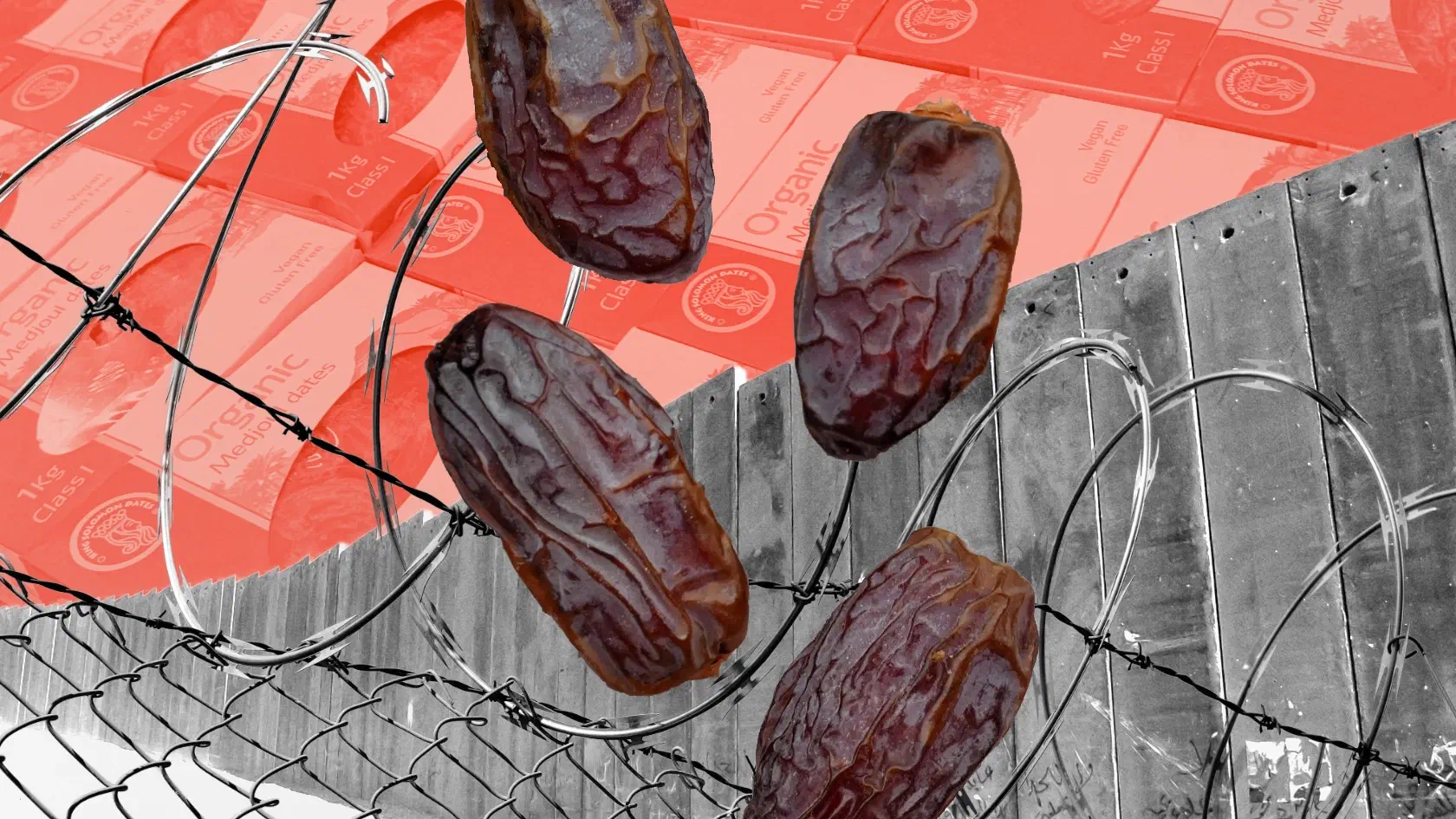
King Solomon dates from Israeli settlements in the West Bank of Palestine are currently being sold in Australia by the popular retailer Harris Farm Markets. Medjool dates are one of the main exports from Israeli settler farms in the West Bank. These farms are illegal under international law.
Hadiklaim is the Israeli date growers’ co-operative that sells dates under the brand King Solomon and has been listed in a September 2026 UN Human Rights Office database of businesses involved in activities in illegal Israeli settlements in the occupied Palestinian territory. These dates are labelled as “Produce of Israel” and the grower is registered as Nativ (or Netiv) Hagdud, which is an illegal Israeli settlement north of the Jericho area.
Harris Farm Markets must take action and scrap apartheid dates from their shelves.
Sanctions
The UK, France, Canada and nine other countries have announced sanctions banning the import of all goods from Israeli settlements in the occupied West Bank in response to “unprecedented levels of settler violence and settlement expansion.” UK Foreign Secretary Ed Miliband has admitted there is “ethnic cleansing of Palestinians in areas of the West Bank.”
In February Foreign Affairs Minister Penny Wong boasted that Australia has now imposed more than 1800 sanctions on Russia and cautioned that businesses should “prevent their supply chains from inadvertently funding Russia’s illegal and immoral invasion of Ukraine.” But the government continues to refuse to apply similar sanctions on Israel despite global pressure mounting.
Harris Farm Markets must remove King Solomon dates from sale. The Albanese government must ban all settlement goods as part of wider sanctions on Israel to end Australia’s ongoing support for its genocide.
Impact of settler farms
Agriculture in the West Bank is an essential tool for Israel’s ethnic cleansing, with farms used to restrict Palestinian access to land and water.
Israel holds complete power over all water resources and water-related infrastructure in the West Bank. It prevents Palestinians from constructing water-related infrastructure—even collecting rainwater. The Israeli water company Mekorot follows rules dictated by the Israeli authorities regarding the amount of water that they are allowed to sell to Palestinians. Many Palestinians are forced to purchase water brought in by trucks at extreme prices, in some cases up half of their income (Amnesty International, 2017).
A Palestinian farmer recently interviewed by the BBC estimated that his palm plantation lacked more than two thirds of the water it needed, making most of his dates not fit for sale (BBC, 2026). Meanwhile Israeli settler farms can grow and export dates that line Harris Farm Markets’ shelves.
Settlements
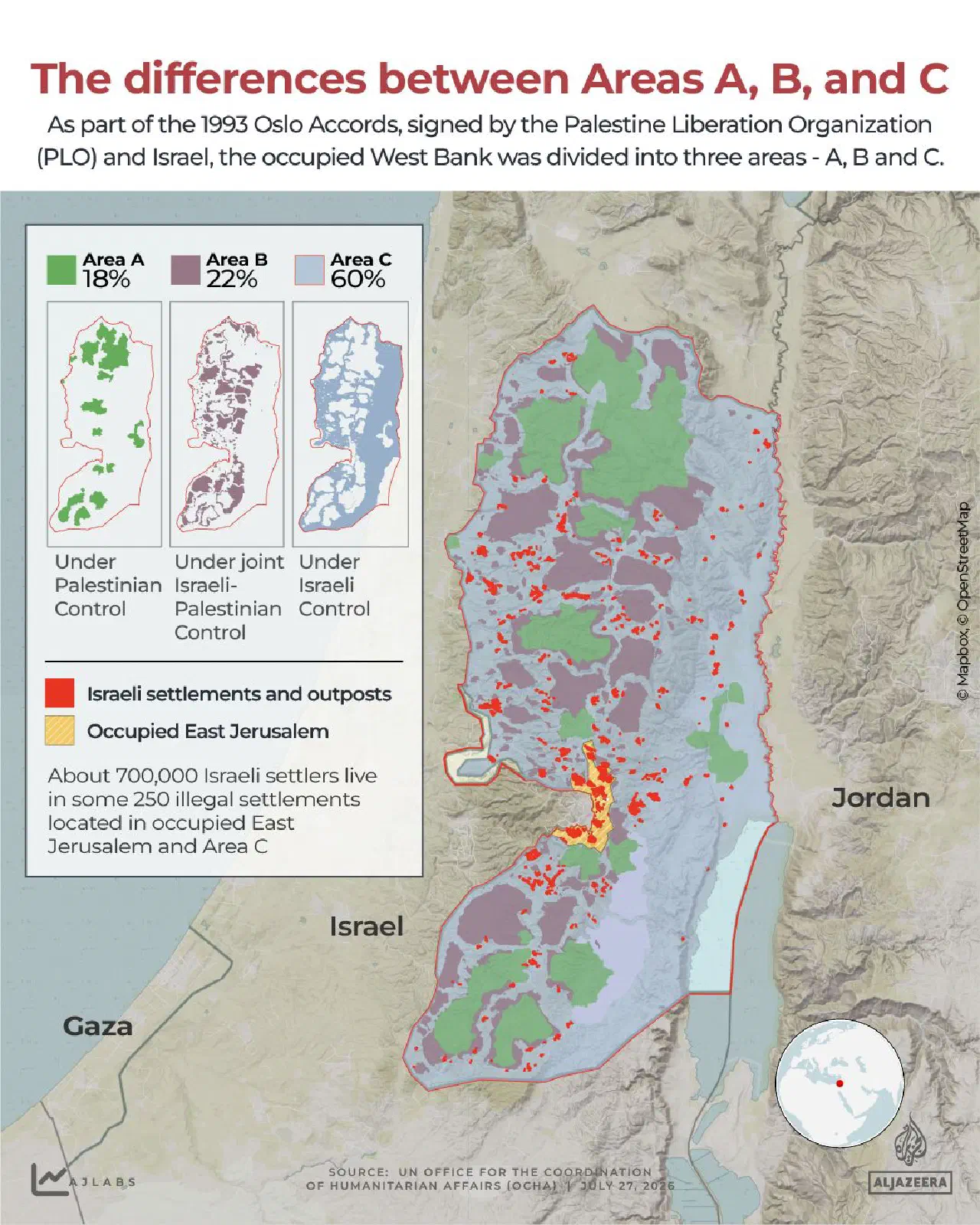
There are 192 illegal Israeli settlements and 400 settlement outposts in the West Bank (Middle East Monitor, 2026).
An Israeli settlement is a Jewish-only community built on Palestinian land. The Israeli government is actively expanding settlements. Outposts are built without a formal approval from the Israeli government, but may be legalised by Israel and turned into settlements. Both settlements and outposts are illegal under international law because they are in violation of the Fourth Geneva Convention.